

Puppets in the Spotlight at Calvary’s CampCompass®
Children and teens bond and support each other at Calvary Hospital’s annual grief camp
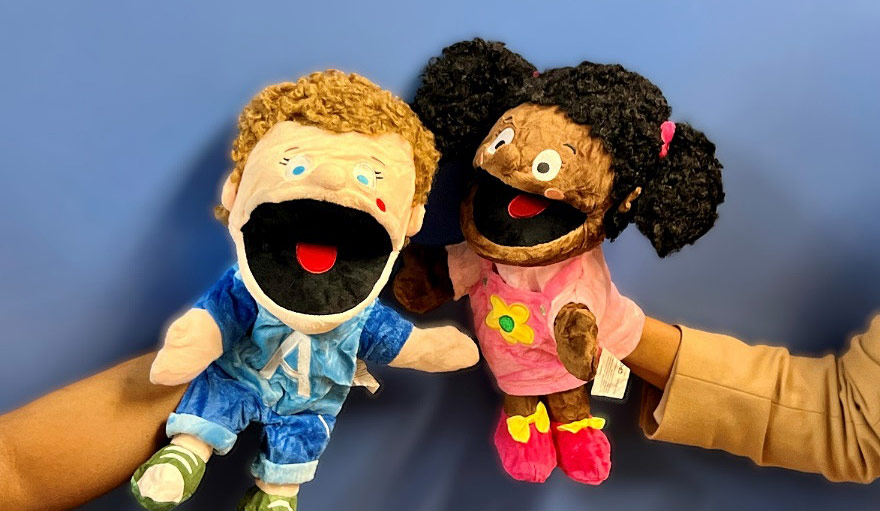
Hand puppets and storytelling, powerful tools in helping children cope with grief and loss, will take center stage at Calvary Hospital’s CampCompass® from August 11th to 15th, the only camp of its kind in New York for children and teens who have experienced the death of significant others due to illness, accidents, and violence.
Established 28 years ago by Calvary, the leader in palliative and hospice care, CampCompass® welcomes children from throughout Greater New York aged 6 to 18 every summer to share their stories, explore grief, honor loss, and celebrate life. The camp is located at CUNY’s Queensborough Community College, in Bayside, Queens.
“Calvary’s CampCompass® is a healing program that engages children, harnesses the power of creativity, and provides opportunities so they can bond and support each other,” said Edgardo Lugo, Director of Bereavement at Calvary.
“This week we’re featuring Puppet Theater and Puppet Workshops – experiences which are particularly good when words are difficult or insufficient to express how you feel,” said Lugo, a registered Play Therapist Supervisor and Certified Group Psychotherapist.
Allowing children to project their thoughts and feelings onto the puppets and the narratives they create can reduce the pressure and fear of judgment that children might feel when expressing their grief, according to Behavioral Health Bereavement Counselor Joanne Castellanos.
“It’s playful. It’s meaningful for children of all ages, because theatre gives them control over their environment and a different understanding of loss,” explained Castellanos.
“Grief is universal, but experienced differently by everyone. CampCompass® honors both the child who is grieving and the person they’ve lost,” she said.
The five-day camp, which hosts 50 children from throughout the city, starts today.
Calvary Bereavement Service caters to children of all ages as well as adults who have experienced the death of a parent, partner, child, or sibling. Calvary also provides support to schools and organizations when there is a death in their community. In addition, Calvary delivers professional grief and bereavement training to nurses, social workers, and mental health counselors throughout the city through its acclaimed Annual Bereavement Course.
Why and how puppets help children heal
Puppets, especially hand puppets, are powerful tools in helping children cope with grief and loss, providing a developmentally appropriate way for children of all ages to process difficult emotions and experiences.
- Emotional Distance and Safety: Children can project their feelings onto the puppet, creating a layer of emotional distance that makes it less intimidating to express sadness, anger, fear, or confusion related to the loss.
- Expression Without Pressure: Puppets provide a voice for children who may struggle to verbally articulate their grief directly to an adult. They can “say” things through the puppet that they are not yet ready to vocalize themselves.
- Storytelling and Processing: Children often use puppets to reenact real-life or imagined scenarios related to the loss, helping them process the event, explore different feelings, and navigate difficult memories or transitions. Therapists can also use puppets to model appropriate responses and guide the child through difficult situations.
- Practicing Social Skills: Role-playing with puppets allows children to practice communication skills, explore different perspectives, and develop empathy within a safe and non-threatening environment.
- Engagement and Regulation: Puppets are inherently playful and can help engage children, even those who may be withdrawn or resistant to traditional talk therapy. Their movement, voices, and character can captivate attention and help regulate emotions during counseling sessions.
What makes puppets entertaining and useful for bereavement
- Playful Engagement: Puppets are naturally appealing to children and can transform potentially overwhelming discussions into a more playful and engaging experience.
- Storytelling and Imagination: Puppets naturally lend themselves to storytelling and role-play, allowing children to be creative and explore different scenarios and problem-solving strategies through imaginative play.
- Non-threatening and Safe: The use of puppets creates a low-stakes environment, reducing the pressure on children to find the “right” words or directly confront their pain.
- Universal Language: Play is a child’s natural language, and puppets provide a way to communicate and understand their inner world, even when verbal language might be insufficient.
- Sensory and Multi-modal Engagement: Puppets with different textures, sounds, and visual characteristics can engage children through various senses, further enriching the therapeutic experience.
Interviews with children, staff, and puppets are available.
Please contact Mike Donahue at mdonahue@calvaryhospital.org or text/call 917-581-4833